Tag Archives: conservation landscapes

What Is Your Yard For?

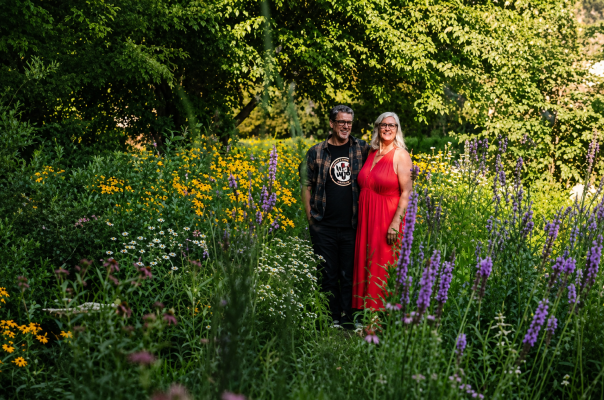
Photo from the Guardian


What I Noticed

While taking my daily virtual field trip through the news, I noticed an article about a couple in Highland Park, Illinois, who gradually transformed much of their conventional lawn into a landscape filled with native plants.

What had once been primarily grass now attracts birds, butterflies, bees and other wildlife.

At first, I noticed the article because of the nature connection. I have spent much of my life thinking about landscapes, wildlife habitat and conservation. But as I continued reading, I began thinking about something broader.

What It Made Me Think About

What is a yard actually for?

That sounds like a ridiculously simple question. But how often do we actually ask it?

Many of us acquire a house with a lawn because that is what came with the house. We mow it. Maybe we fertilize it. We control weeds. Some people water it. We buy equipment to maintain it or pay someone else to do the work.

And year after year, we keep doing it.

But why?

There are plenty of good answers. A lawn can be a wonderful place for children to play, for a dog to run, for friends to gather or simply for someone who enjoys the appearance of an open green space.

But what about the portions of our yards that we maintain primarily because that’s what we’ve always done?

That is what this article made me ponder.

A yard is an asset. And like any asset, perhaps it is worth occasionally asking what we want it to do for us.

Could part of it grow food?

Could part provide habitat for birds and pollinators?

Could a tree provide shade that makes sitting outside more enjoyable?

Could a small garden give us flowers to photograph, butterflies to watch or simply a reason to walk outside every morning and see what changed overnight?

Could changing part of a lawn actually reduce some maintenance while increasing enjoyment?

And there is no single correct answer.

The point isn’t that everyone should replace their lawn with native plants.

The point is to notice the lawn in the first place.

Instead of seeing it simply as something that needs to be mowed again, perhaps we could occasionally stop and ask:

What is this little piece of land for—and what would I like it to provide?

Maybe the answer is grass.

Maybe it’s tomatoes.

Maybe it’s a pollinator garden.

Maybe it’s a shade tree and a comfortable chair.

Maybe it’s a place for the grandchildren to play.

Maybe it’s some of each.

That seems to me like a small example of The Stewardship Way.

Notice something we already have.

Become curious about it.

Ask whether we’re managing it intentionally or simply continuing what we’ve always done.

And then decide whether anything needs to change.

Sometimes the answer may be nothing at all.

But we wouldn’t know that until we stopped long enough to notice.

Read the Article Yourself

The article that started me pondering this was “How one American couple ditched their lawn and created a wildlife haven.” It tells the story of an Illinois couple who gradually changed their conventional yard and what happened as wildlife began returning.

Read the article in The Guardian

A Question to Ponder:
If your yard is an asset, what return would you like it to provide—not simply in dollars, but in time, enjoyment, food, beauty, wildlife, purpose or memories?


The Beauty and Conservation Value of Paper Birch

On my recent hike around the Five Rivers Environmental Education Center in Delmar, New York, I stopped to admire this striking Paper Birch (Betula papyrifera). Its white, peeling bark stood out against the darker trunks of surrounding trees, catching the soft autumn light. Paper Birch is one of those species that instantly sparks curiosity—its bark looks almost like sheets of paper curling off, and indeed, people have found countless uses for it over centuries.

But beyond its beauty and history, the Paper Birch plays an important role in a conservation landscape.


Native Range and Habitat

Paper Birch is native to much of northern North America, stretching across Canada and into the northern United States, including the Adirondacks and northeastern hardwood forests of New York. It thrives in cooler climates, often colonizing recently disturbed areas such as old fields, burn sites, or logged woods. As a pioneer species, it is one of the first trees to take hold after disturbance, stabilizing soil and preparing the way for other species in the successional process.


Ecological Benefits

Paper Birch provides critical benefits to wildlife:

  • Food Source:
    The seeds are eaten by finches, siskins, and other seed-eating birds. Moose and deer browse on young birch twigs, while snowshoe hares and beavers rely on the bark and shoots for food in lean months.

  • Habitat:
    The peeling bark provides cover for insects, which in turn feed woodpeckers and other insectivorous birds. Cavities in older birches can become nesting sites for chickadees and nuthatches.

  • Pollinator Value:
    Birch catkins release pollen that sustains early spring pollinators when other resources are scarce.


Conservation and Human Connections

For centuries, Indigenous peoples of North America used Paper Birch bark for canoes, shelters, and containers, taking advantage of its light weight and natural waterproofing. Even today, naturalists admire its bark as one of the best fire-starting materials in the woods—it burns hot even when damp.

From a conservation perspective, Paper Birch is a reminder of resilience and transition. It doesn’t live as long as oaks or maples, but its ecological role is just as vital. By providing food, shelter, and succession pathways, birch helps ensure that forests remain dynamic and diverse.


Paper Birch in Conservation Landscapes

If you’re thinking about creating a conservation-friendly landscape, Paper Birch can be a valuable addition, particularly in northern climates. It offers:

  • Visual appeal with its white bark and bright yellow fall foliage.

  • Wildlife value through seeds, twigs, and bark.

  • Diversity in habitat by supporting insects and birds that rely on peeling bark and canopy cover.

While it prefers cooler soils and doesn’t tolerate long-term heat stress (making it less suited for southern plantings), in places like upstate New York, it can be an excellent choice to bring both beauty and biodiversity to a landscape.


Closing Thought

Standing among the Paper Birches at Five Rivers, I was reminded of how every tree—no matter how common or short-lived—serves as a keystone for the life around it. The Paper Birch may not dominate the forest for centuries, but in its decades of life, it provides essential resources that ripple through the ecosystem.

That, in itself, is a lesson in conservation: sometimes the most important contributions are those that prepare the way for others.

Why Is That Leaf Red in July?

A Nature of Things Reflection Inspired by a Simple Walk and a Thoughtful Question

It was still hot and sticky well into the evening as Theresa and I took our usual walk down the road near our home. Most of the plants lining the ditches and field edges looked about how you’d expect them to look in mid-July—lush, green, and thriving. But every so often, we noticed something odd.

One leaf here. Another there.

Bright red. Not faded or diseased. Just red—like it had skipped ahead a few months and landed straight in autumn.

Theresa pointed to one of them and asked, “Why would just one leaf turn red this early?”

It was a fair question, and I had to admit I didn’t really know. I guessed it might be heat stress, but it seemed strange that only one leaf on the whole plant would be affected.

So, I did what any curious naturalist does when nature throws out a question mid-walk—I made a mental note, snapped a few pictures, and looked it up when we got home.


The Answer Is… Complicated, But Interesting

Turns out, red leaves in summer—especially when it’s just one or two on an otherwise green plant—are often signs of localized stress. That could mean drought stress, root injury, insect damage, or even a fungal infection affecting a small part of the plant.

But why red?

That’s due to anthocyanins—the same pigments responsible for the reds and purples of fall. When a leaf starts to shut down due to stress or damage, it may produce these pigments as a sort of protection, shielding the leaf from intense sunlight or helping manage internal chemical stress.

In other words, that red leaf might be waving a little flag that says, “Something’s not quite right here, but I’m trying to cope.”


A Bigger Lesson in a Small Leaf

As we finished our walk, I thought about how many times I’ve either not asked a question like that or let one float away unanswered. And it reminded me of something I’ve come to believe: you don’t have to have all the answers in the moment to learn from nature.

Sometimes it’s enough to notice, take a picture, wonder a little, and look it up later. That curiosity—sparked by something as small as a red leaf—is how you begin to understand a landscape more deeply.

So, next time you see something unusual—an odd color, a strange sound, a curious behavior—don’t worry if you can’t name it right away.

Let it sit with you. Bring it home. Ask someone. Search it out. And maybe even write about it.

That’s the nature of things.


🐦 Have you ever noticed one red leaf on a green plant in summer? I’d love to hear your thoughts—or see your photos—in the comments. And if you enjoy these kinds of simple observations with deeper meaning, consider subscribing my Nature of Things newsletter on Substack.

https://natureandthings.substack.com

Or join The Nature of Things group on Facebook: https://www.facebook.com/groups/thenatureofthings