What I Noticed
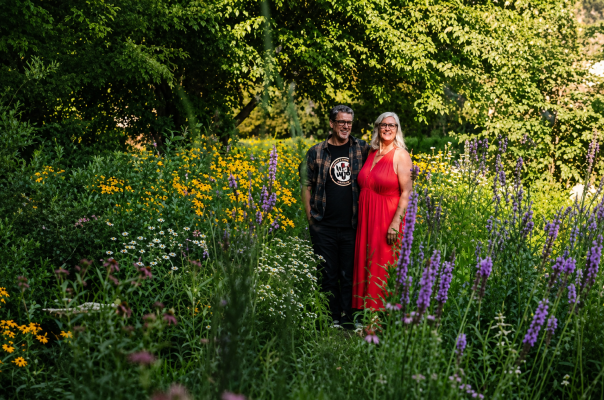
While taking my daily virtual field trip through the news, I noticed an article about a couple in Highland Park, Illinois, who gradually transformed much of their conventional lawn into a landscape filled with native plants.
What had once been primarily grass now attracts birds, butterflies, bees and other wildlife.
At first, I noticed the article because of the nature connection. I have spent much of my life thinking about landscapes, wildlife habitat and conservation. But as I continued reading, I began thinking about something broader.
What It Made Me Think About
What is a yard actually for?
That sounds like a ridiculously simple question. But how often do we actually ask it?
Many of us acquire a house with a lawn because that is what came with the house. We mow it. Maybe we fertilize it. We control weeds. Some people water it. We buy equipment to maintain it or pay someone else to do the work.
And year after year, we keep doing it.
But why?
There are plenty of good answers. A lawn can be a wonderful place for children to play, for a dog to run, for friends to gather or simply for someone who enjoys the appearance of an open green space.
But what about the portions of our yards that we maintain primarily because that’s what we’ve always done?
That is what this article made me ponder.
A yard is an asset. And like any asset, perhaps it is worth occasionally asking what we want it to do for us.
Could part of it grow food?
Could part provide habitat for birds and pollinators?
Could a tree provide shade that makes sitting outside more enjoyable?
Could a small garden give us flowers to photograph, butterflies to watch or simply a reason to walk outside every morning and see what changed overnight?
Could changing part of a lawn actually reduce some maintenance while increasing enjoyment?
And there is no single correct answer.
The point isn’t that everyone should replace their lawn with native plants.
The point is to notice the lawn in the first place.
Instead of seeing it simply as something that needs to be mowed again, perhaps we could occasionally stop and ask:
What is this little piece of land for—and what would I like it to provide?
Maybe the answer is grass.
Maybe it’s tomatoes.
Maybe it’s a pollinator garden.
Maybe it’s a shade tree and a comfortable chair.
Maybe it’s a place for the grandchildren to play.
Maybe it’s some of each.
That seems to me like a small example of The Stewardship Way.
Notice something we already have.
Become curious about it.
Ask whether we’re managing it intentionally or simply continuing what we’ve always done.
And then decide whether anything needs to change.
Sometimes the answer may be nothing at all.
But we wouldn’t know that until we stopped long enough to notice.
Read the Article Yourself
The article that started me pondering this was “How one American couple ditched their lawn and created a wildlife haven.” It tells the story of an Illinois couple who gradually changed their conventional yard and what happened as wildlife began returning.
Read the article in The Guardian
A Question to Ponder:
If your yard is an asset, what return would you like it to provide—not simply in dollars, but in time, enjoyment, food, beauty, wildlife, purpose or memories?