All posts by igolfnbird@gmail.com

A Walk Through Van Dyke Spinney Preserve

Yesterday evening, Theresa and I decided to take a short walk through the Van Dyke Spinney Preserve, located less than a mile from our home in the Town of Bethlehem, New York.

This 33-acre preserve was accepted by the Mohawk Hudson Land Conservancy in 2012 as part of the permitting process for a nearby residential development. What might appear to be a small tract of land on a map provides an impressive diversity of habitats, including forests, wetlands, floodplain communities, and stream corridors.

The preserve features a gently rolling one-mile loop trail that winds through mature woodlands and alongside portions of the Phillipinkill, a tributary of the Vlomans Kill, which eventually flows into the Hudson River. Along the trail, visitors encounter small bridges, seasonal wetlands, towering trees, native wildflowers, and quiet views of the stream as it meanders through the floodplain.

One of the things I appreciate most about Van Dyke Spinney Preserve is how accessible it is. Located at 246 Van Dyke Road in Delmar, New York, the preserve includes a convenient parking area and offers an easy opportunity to spend an hour immersed in nature without traveling far from home.

During our walk, the forest was alive with the soft light of early evening filtering through the canopy. Forget-me-nots bloomed along the trail edges, the Phillipinkill reflected the surrounding greenery like a mirror, and the cool, shaded woods provided a welcome escape from the day’s heat. It was a reminder that meaningful encounters with nature do not require a trip to a national park or a remote wilderness area. Sometimes they can be found just down the road.

Places like Van Dyke Spinney Preserve demonstrate the value of local land conservation. They protect water quality, provide wildlife habitat, preserve natural beauty, and offer nearby residents a chance to reconnect with the natural world. For those of us interested in conservation and stewardship, they also serve as living classrooms where we can observe, learn, and simply enjoy the wonders of nature.

As I often remind readers of The Nature of Things, stewardship begins by noticing things. A short walk on a local trail can lead to discoveries, appreciation, and ultimately a deeper connection with the places we call home.


An Email From Alaska

Yesterday morning, I opened my email and found a message warning that the federal government was preparing to offer portions of the Arctic National Wildlife Refuge for oil and gas leasing.

The message came from a conservation organization and, like many advocacy messages, it was written to encourage immediate action. My first reaction was not to sign a petition or hit the delete button. Instead, I found myself transported back several decades to a time when I was fortunate enough to play a small role in efforts to protect some of Alaska’s remarkable public lands.

For many Americans, Alaska exists only as a distant place on a map. Yet it contains some of the last great expanses of relatively intact wilderness on Earth. Vast mountain ranges, sprawling wetlands, tundra, rivers, forests, and coastlines support wildlife populations that most of us can only imagine. More importantly, many of these lands belong to all Americans.

The Arctic National Wildlife Refuge, often called ANWR, is one of those places.

What makes the refuge so important is not simply its size. It is the wildlife. The refuge provides habitat for polar bears, caribou, wolves, musk oxen, and hundreds of species of birds. Many of those birds do not stay in Alaska. They migrate thousands of miles each year, connecting the Arctic to places like New York, Indiana, Florida, and communities all across North America.

A shorebird that nests in the Arctic may stop along the Atlantic Coast. A waterfowl species that breeds in Alaska may spend part of the winter in wetlands near your hometown. In nature, everything is connected.

As I read the email, I decided to look beyond the headline. The message claimed that nearly 700,000 acres could be offered for oil and gas leasing. As it turns out, that statement is generally accurate. However, leasing land is not the same thing as drilling on it. Many additional approvals, studies, and decisions would still be required before any development could occur.

That distinction is important.

But so is the larger question.

How should lands like the Arctic National Wildlife Refuge be managed? Should they remain primarily places for wildlife and wilderness? Should portions be available for energy development? Can both goals coexist? These are not simple questions, and reasonable people can disagree on the answers.

What struck me most this morning was not the politics of the moment. It was the realization that the same fundamental debate has continued for decades. The names of the politicians change. The administrations change. The headlines change. Yet the underlying question remains remarkably constant.

What responsibilities do we have as stewards of the natural resources entrusted to us?

Throughout my life and career, I have believed that conservation is not about choosing between people and nature. It is about finding ways to improve the quality of life and the environment at the same time. Good stewardship requires information, thoughtful discussion, and a willingness to look beyond slogans and headlines.

The email I received this morning reminded me of something else as well.

The conservation decisions we make today will not only affect wildlife in Alaska. They will influence what future generations inherit, whether they live in Anchorage, Albany, Indianapolis, Tampa Bay, or a small rural community somewhere in between.

Sometimes an email is just an email.

And sometimes it serves as a reminder that stewardship is never finished. Each generation must decide what it values, what it is willing to protect, and what kind of legacy it hopes to leave behind.

That may be the most important lesson Alaska has to teach us.

It All Started in the Backyard

The Waldenmaier Road Stewardship Corridor Project

When people hear the words bird observatory, they often picture a large research station with scientists, expensive equipment, and acres of protected land.

The truth is, the Dodson Bird Observatory began in a backyard.

It started with something much simpler: paying attention.

A few years ago, I began keeping track of the birds and wildlife around our home in Albany County, New York. I watched what visited the feeders, what nested in the shrubs, what sang from the trees, and what passed overhead during migration. Over time, I realized that our small property was connected to something much larger.

Birds didn’t recognize property lines.

Neither did butterflies, dragonflies, wildflowers, fungi, or mammals.

What happened in our backyard was influenced by neighboring fields, woodlots, wetlands, roadsides, and residential landscapes. Nature was operating across the entire landscape, regardless of who owned the land.

That realization led me to expand my observations beyond our property and into the surrounding area. Eventually, those efforts evolved into what I recently created on iNaturalist as the Waldenmaier Road Stewardship Corridor Project. (click the link to visit the project.)

Today, the project includes:

  • 546 observations
  • 232 species
  • 275 identifiers
  • 3 active observers

Those numbers represent far more than a collection of records.

They represent a growing understanding of the living community that surrounds us.

The project area follows Waldenmaier Road and adjoining lands, creating a stewardship corridor that includes forests, fields, wetlands, streams, residential landscapes, and agricultural lands. Every observation helps tell the story of the place.

Some observations document common species that most people overlook.

Others reveal surprising discoveries.

Each observation adds another piece to the puzzle.

What excites me most is that this project demonstrates something I have come to believe deeply:

Anyone can become a steward of the place where they live.

You do not need to own hundreds of acres.

You do not need a biology degree.

You do not need special equipment.

You simply need to notice.

Notice the bird singing from a fence post.

Notice the wildflower blooming along a roadside ditch.

Notice the butterfly visiting a patch of clover.

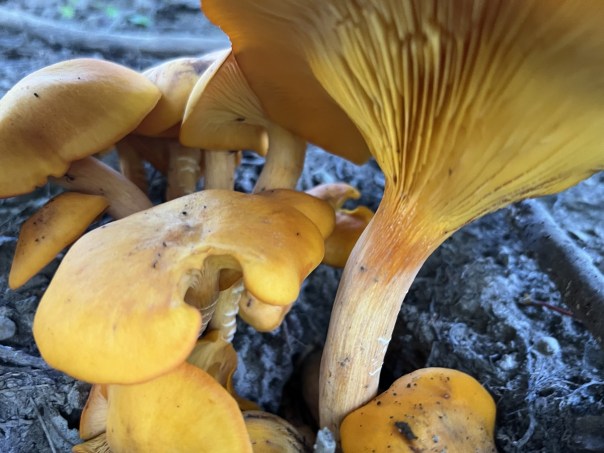
Notice the mushrooms that appear after a summer rain.

Notice the changing seasons.

Stewardship begins with awareness.

Awareness leads to understanding.

Understanding leads to appreciation.

And appreciation often leads to action.

Many people assume conservation starts with large organizations, government agencies, or scientific institutions. While those organizations play important roles, conservation also begins in backyards, neighborhoods, parks, schoolyards, farms, and roadsides.

It begins when ordinary people decide that the places around them matter.

Are home landscape, which I called The Dodson Bird Observatory is proof of that idea.

What started as a few observations in our backyard has expanded into a broader effort to document and understand an entire local landscape. The Waldenmaier Road Stewardship Corridor Project is simply the next step in that journey.

Who knows where it might lead next?

Perhaps other residents will begin making observations.

Perhaps new species will be discovered.

Perhaps stewardship projects will emerge that improve habitat for birds, pollinators, and other wildlife.

Every large conservation effort starts with a small first step.

For us, that step was looking out the back window.

For you, it might begin with a walk around your yard, your neighborhood, or your favorite local park.

Because stewardship doesn’t start with grand plans.

It starts by noticing things.


Ron Dodson
The Dodson Bird Observatory
“Observing nature, one place at a time.”

A Second Life for a Birding Book

Second-Hand Conservation

Every once in a while, I’ll feature an item from my eBay or Etsy stores under the banner of Second-Hand Conservation.

Why?

Because conservation isn’t just about protecting forests, wetlands, wildlife, and natural resources. It is also about how we use the resources we already have. Every item that is reused, repurposed, repaired, gifted, or sold second-hand is one less item headed to a landfill and one less demand for something new to be manufactured.

Today’s featured item is a copy of Of a Feather: A Brief History of American Birding by Scott Weidensaul.

Birdwatching is now one of America’s most popular outdoor activities, enjoyed by millions of people each year. Yet birding wasn’t always the widespread pastime it is today. This book explores how birdwatching evolved from a pursuit practiced by a relatively small group of naturalists into a major recreational activity that has influenced conservation, environmental education, and our understanding of the natural world.

As someone who has spent much of his life working in conservation and environmental education, I find books like this particularly interesting because they help tell the story of how people developed a deeper appreciation for birds and nature. That appreciation has often translated into conservation action.

This particular copy comes from my personal library. Like many of the books I own, it has served its purpose for me and is now ready to continue its journey with someone else.

That’s really what Second-Hand Conservation is all about.

A book is written once, printed once, and then has the potential to educate and inspire many readers over its lifetime. Passing books along rather than allowing them to sit unused on shelves is a simple form of stewardship.

If you’re interested in learning more about the history of birding in America, this book may be worth a look.

View the listing here:
https://www.ebay.com/itm/236845179899


“Doing Good and Doing Well” sometimes starts with something as simple as giving a good book a second life.
— Ron Dodson, The Conservation Company

Stewardship of What?

This morning I read an article celebrating 130 years of “stewardship” connected to the Dow Jones Industrial Average.

The headline caught my attention because stewardship is a word I use often myself.

The article focused on protecting and maintaining a financial system over time — preserving continuity, trust, and institutional stability. There is certainly value in that.

But as I read it, I found myself pondering a deeper question:

Stewardship of what?

Modern society has become remarkably skilled at measuring financial performance. We track markets constantly. We celebrate growth, efficiency, and economic expansion.

But what about stewardship of:

  • soil,
  • water,
  • wildlife,
  • local communities,
  • public trust,
  • or the long-term health of the natural systems upon which all economies ultimately depend?

A stock index can tell us much about financial conditions. But it cannot fully tell us about the condition of a community, a wetland, a forest, or the emotional well-being of the people who live there.

Perhaps one of the great challenges of our time is not whether we practice stewardship, but what we choose to steward.

That seems worth pondering. Deeper thoughts are forthcoming in Conservation Lifestyles.

When Kids Helped Green Up Henderson

This morning I was going through old boxes of photographs that I have taken over the years. As I sorted through them, I found myself traveling back through time — remembering projects, people, ideas, and moments that once seemed ordinary but now feel pretty special.

One group of photographs stopped me in my tracks.

They showed kids outdoors with dirty hands, shovels, buckets, trees, flowers, and smiles. The pictures were from a project I launched years ago in Henderson, Kentucky called Operation Greenup.

At the time, Operation Community Pride had spent nearly a year focused heavily on litter reduction and community cleanup efforts. We had made progress, but I began to realize something important: cleaning up a community is only the first step. If you really want people to care about a place, you also have to help make it beautiful, alive, and worth caring about.

So we shifted gears.

Instead of only picking things up, we started planting things.

Trees. Shrubs. Flowers. Wildlife-friendly vegetation. Anything that could brighten a neighborhood, improve public spaces, and help reconnect people with nature.

And I decided early on that kids needed to be at the center of it.

That turned out to be one of the best decisions we ever made.

The response was incredible. Sometimes we had more children volunteering than we had plants or tools to give them. But somehow we always made it work. Businesses donated supplies. Florists and tree sellers contributed plants. Schools participated. The Chamber of Commerce helped identify locations around the community that needed attention.

Before long, we had built a small army of enthusiastic young people armed with shovels and purpose.

And they put a real shine on Henderson, Kentucky.

Looking back now, I realize the project was never just about planting trees or flowers. It was about planting ownership, pride, stewardship, and possibility in young people. Many of those kids are grandparents themselves today. But I like to think that somewhere deep inside, they still remember that feeling of digging a hole, planting something living, and helping make their community better.

Sometimes the seeds we plant in people matter even more than the seeds we plant in the ground.

If you are interested in reading a full story about this project visit my free online Conservation Chronicles publication at Conservation Chronicles

Stewardship and Billy Beer

Yesterday morning I heard the familiar “Cha-ching” sound on my cell phone—the sound that tells me something just sold in my eBay store.

A few years ago, after retiring, I started The Conservation Company store as a way to clear out items we no longer needed. But over time, it became something more. It became one small way that I practice what I call a Stewardship Lifestyle—giving still-useful items a second chance at life instead of sending them to a landfill.

Along the way, the store also generates a little extra income—helping me keep my publications free of charge while supporting a few conservation organizations that are doing important work.

So what sold yesterday?

An empty can of Billy Beer.

Yes…an empty beer can.

Who would have thought?

To be honest, I have no idea where I originally came across this little collector’s gem. I do vaguely remember drinking a Billy Beer or two many years ago—and if memory serves me right…it wasn’t exactly unforgettable for the right reasons.

Still, somebody out there wanted it enough to buy it.

And that’s the point.

Stewardship doesn’t always look like planting trees, restoring wetlands, or building bird habitat. Sometimes it looks like giving an old collectible a second life, making a few extra bucks, and using that money to do a little good in the world.

That’s stewardship too.

If this little story got you thinking about your own choices, habits, or opportunities, you might enjoy my Conservation Lifestyles online magazine, where I share practical ideas for building your own Stewardship Way—where you live and work. Subscriptions are free at Conservation Lifestyles

A Walk at Papscanee

Yesterday, Theresa and I decided to visit Papscanee Island Nature Preserve, located just six miles from our home—as the crow flies. Of course, crossing the Hudson River by car is a very different journey than flying in a straight line. About thirty minutes later, we arrived.

From the moment we stepped onto the loop trail, I was reminded why exploring local nature preserves has become such an important part of my Stewardship Lifestyle. The fresh spring air, the songs of birds hidden among the trees, the movement of the river, and the quiet sounds of the forest all have a way of helping me slow down, pay attention, and see things I might otherwise miss.

One of my favorite moments was spending time along the banks of the mighty Hudson—watching the water, studying the shoreline, and thinking about all the stories this river has carried over thousands of years.

But this visit was about more than just another enjoyable hike.

There was also a deeply personal reason why Papscanee was high on my list of places to visit—one connected to my own family history and a story that reaches back generations.

I’ll be sharing that story soon in a future article in The Nature of Things.

To follow along, you can subscribe for free at The Nature of Things

I Didn’t Set Out to Write About Local Food…

I recently reviewed a proposed act in Congress designed to make it easier for local farmers to participate in federal nutrition programs like SNAP and WIC.

At first glance, it looked like a small policy issue.

But the deeper I looked, the bigger the question became:

If we say we want local food…why do we make it so hard to buy?

That question led me to write a new White Paper.

But it also reminded me of something bigger:

Food is never just about food.

It’s about land. Water. Community. Health. Local economies. And whether we’re building systems that help people and places thrive—or quietly working against ourselves.

That’s why local food matters to The Stewardship Way.

Sometimes the biggest stewardship lessons begin with something as simple as what’s on your plate.

— Ron Dodson

Want to read more about this in a recently published article in Conservation Lifestyles on Substack? CLICK HERE


Not Retired From Life

I’m in my late seventies now, which by some definitions makes me an old guy. That part doesn’t bother me much.

What interests me more is whether a person is still alive in spirit, curious in mind, and engaged in life.

Many people retire from jobs. Some, often without realizing it, begin retiring from life itself. They stop exploring, stop noticing, stop learning, and slowly allow their world to grow smaller.

I chose a different path.

I still walk. I still travel. I still notice things. I still wonder why places work the way they do, why landscapes change, why communities struggle, and how life might be improved.

In many ways, I’m still doing some of the same things I was doing in the early 1970s—paying attention, caring about nature, thinking about stewardship, and hoping to encourage others to become more engaged in life.

The job titles may have changed. The seasons of life may have changed. But curiosity, purpose, and the desire to contribute do not need to retire.

These days I continue that journey through my writing, where I share observations, lessons from the past, and practical ideas for living with more purpose, joy, and stewardship.

If that interests you, I invite you to visit my Publications page:

https://www.rgdodson.com/publications

You may find something there that speaks to where you are in life right now.

I may be retired from certain jobs.

But I’m not retired from life.